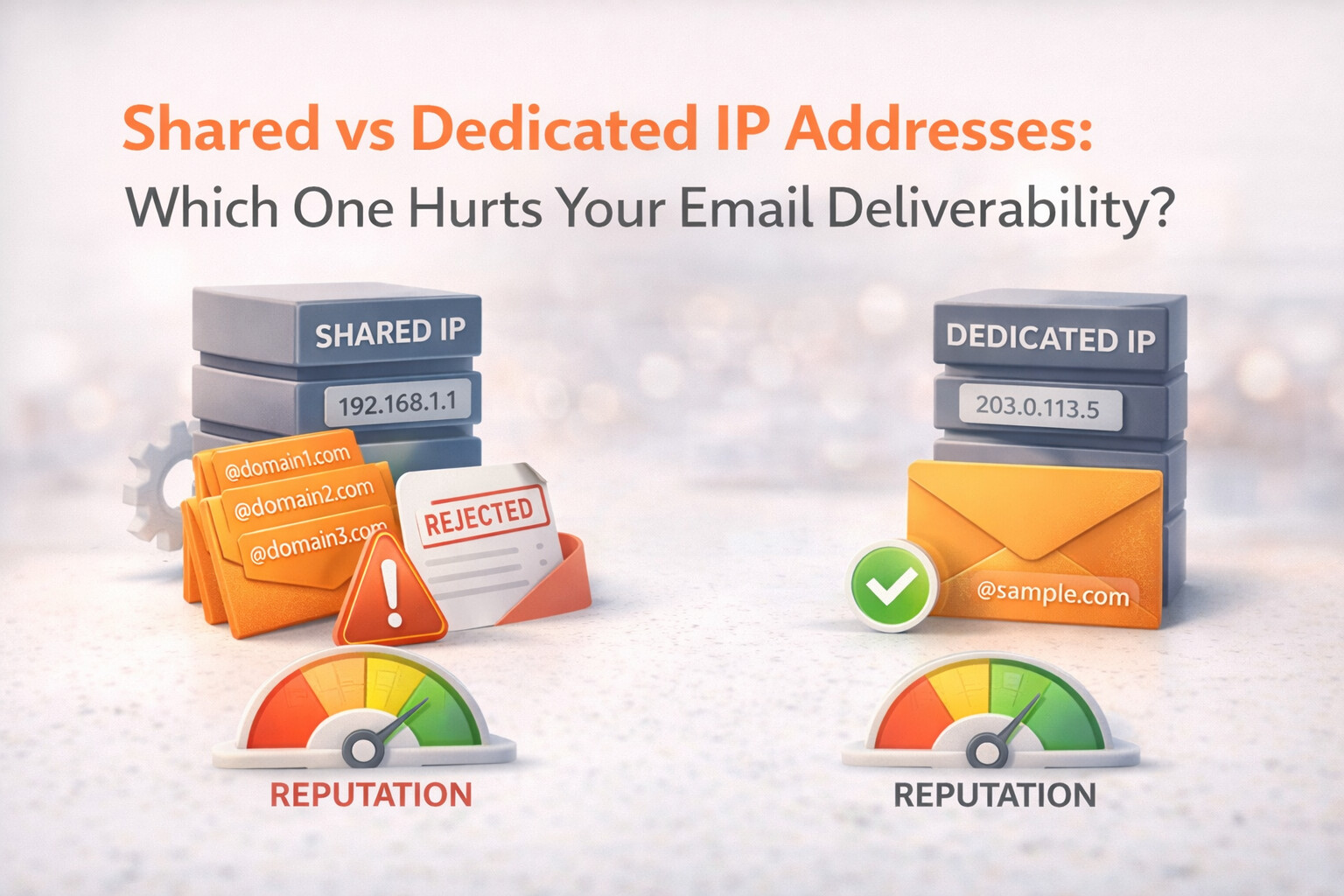
Shared vs Dedicated IP Addresses: Which One Hurts Your Email Deliverability?
Learn the key differences between shared and dedicated IP addresses and how each affects email deliverability, IP reputation, and spam filtering.
Introduction
Email deliverability depends on many factors, but one of the most overlooked is the type of IP address used to send emails. Businesses often choose between shared and dedicated IP addresses without fully understanding how this decision impacts their sender reputation, spam filtering, and inbox placement.
In this article, we explain the differences between shared and dedicated IPs, how each affects email deliverability, and how to determine which option is best for your email infrastructure.
What Is a Shared IP Address?
A shared IP address is used by multiple senders at the same time. This setup is common with shared hosting providers, email marketing platforms, and low-volume email services.
Because many domains send emails from the same IP, the reputation of that IP is influenced by everyone using it. If one sender engages in spammy behavior, it can negatively affect all other senders sharing the same address.
What Is a Dedicated IP Address?
A dedicated IP address is assigned to a single organization or domain. All emails sent from that IP belong to one sender, which means the reputation is fully under that sender’s control.
Dedicated IPs are typically used by businesses with higher email volumes, transactional email systems, or organizations that require strict control over email reputation and deliverability.
How Shared IPs Affect Email Deliverability
Shared IP addresses can be convenient and cost-effective, but they carry inherent risks:
- Your deliverability depends on the behavior of other senders
- Spam complaints from others can lower IP reputation
- Blacklisting may affect multiple domains at once
- Limited visibility into reputation issues
Even if your domain has valid SPF, DKIM, and DMARC records, a poor shared IP reputation can still cause emails to land in spam folders.
How Dedicated IPs Impact Email Deliverability
Dedicated IPs offer more control, but they also come with responsibility.
- Full ownership of IP reputation
- No impact from other senders’ behavior
- Better consistency for high-volume sending
- Requires proper IP warm-up and monitoring
If a dedicated IP is misconfigured or abused, deliverability issues can appear quickly. That is why continuous monitoring is critical.
IP Reputation and Blacklists
Whether you use a shared or dedicated IP, reputation plays a major role in how email providers treat your messages. Mailbox providers evaluate IP history, spam complaints, sending patterns, and blacklist status.
Using tools like the IP Reputation Checker and Blacklist Checker helps identify reputation issues before they impact deliverability.
When Should You Use a Shared IP?
A shared IP may be suitable if:
- You send low email volumes
- You use a reputable email service provider
- Email is not mission-critical for your business
However, shared IPs should be monitored regularly to ensure other senders are not harming overall reputation.
When Is a Dedicated IP the Better Choice?
A dedicated IP is usually the better option if:
- You send large volumes of emails consistently
- You rely on transactional or business-critical emails
- You want full control over reputation and deliverability
In these cases, proper authentication and monitoring are essential to maintain trust.
Why a Complete Email & IP Audit Matters
Choosing between a shared and dedicated IP is only part of the equation. Misconfigured DNS records, weak authentication, or a damaged IP reputation can undermine deliverability regardless of IP type.
A Complete Email & IP Audit helps analyze IP reputation, authentication status, blacklist exposure, and email infrastructure health in one place.
Conclusion
Shared and dedicated IP addresses both have advantages and risks. The wrong choice can quietly hurt email deliverability, while the right setup can significantly improve inbox placement.
Understanding your email volume, risk tolerance, and infrastructure — combined with regular audits — is the best way to ensure long-term email success.