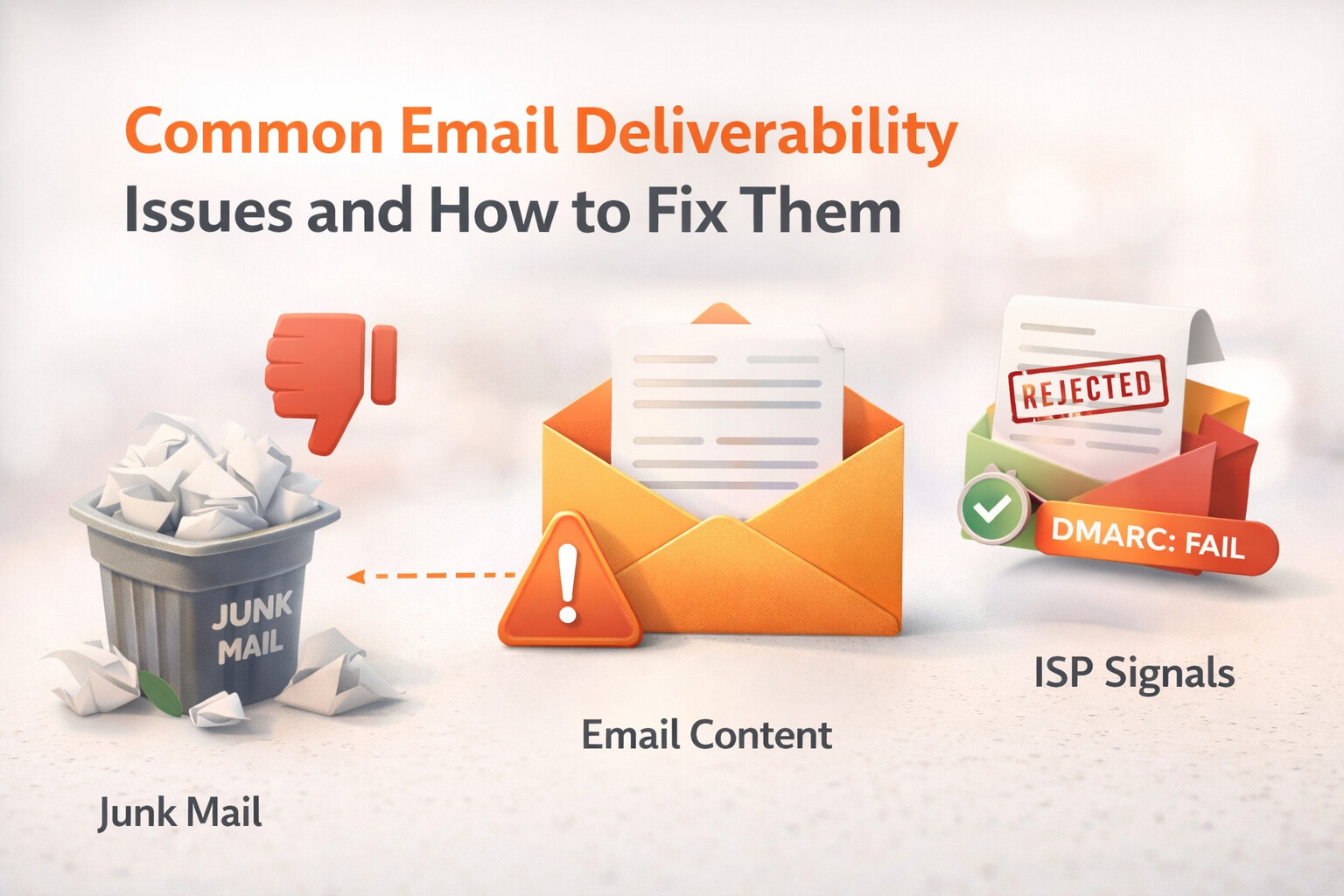
Common Email Deliverability Issues and How to Fix Them
Learn the most common email deliverability issues that cause emails to land in spam and discover practical ways to fix them and improve inbox placement.
Introduction
Email deliverability problems rarely appear overnight. In most cases, they build up gradually — emails start landing in spam, open rates drop, and eventually messages stop reaching inboxes altogether.
Understanding what causes these issues allows senders to fix them early, before reputation damage becomes difficult to reverse.
When Reputation Works Against You
One of the first signals mailbox providers evaluate is sender reputation. This includes both the sending IP and the domain itself. If either has a history of abuse, spam complaints, or suspicious behavior, inbox placement becomes unlikely.
Regular checks using the IP Reputation Checker and the Blacklist Checker help identify trust issues before they impact delivery.
Authentication That Looks Correct — But Isn’t
Many domains technically have SPF, DKIM, and DMARC records, yet still fail authentication due to misalignment, outdated DNS entries, or partial configuration.
Mailbox providers expect authentication to be both valid and consistent. Even minor configuration mistakes can reduce trust.
- SPF Record Checker confirms authorized senders
- DKIM Checker validates message integrity
- DMARC Checker enforces authentication policy
Low Engagement Sends the Wrong Signal
Email providers closely monitor how recipients interact with messages. Emails that are ignored, deleted immediately, or never opened suggest that recipients do not value the content.
Over time, low engagement teaches spam filters to distrust future emails — even legitimate transactional messages.
Content That Triggers Filters
Spam filtering engines analyze more than just keywords. Formatting, link structure, HTML quality, and message balance all contribute to filtering decisions.
Emails that resemble phishing attempts or aggressive promotions are more likely to be filtered, regardless of sender legitimacy.
Unpredictable Sending Patterns
Sudden spikes in email volume often raise red flags. New domains and previously inactive senders are especially vulnerable to this type of filtering.
Mailbox providers prefer predictable sending behavior that aligns with recipient expectations.
Domain Trust Takes Time to Build
Even with clean infrastructure, domain reputation develops gradually. Frequent configuration changes, unauthorized senders, or forwarding misconfigurations can slow this process.
Consistent monitoring and alignment across DNS, authentication, and sending behavior improves long-term trust.
Shared Infrastructure Side Effects
Using shared hosting or shared email services introduces risk. Your deliverability may be affected by other senders on the same IP range, even if your configuration is correct.
This makes reputation monitoring especially important for shared environments.
A Practical Path to Better Deliverability
Solving deliverability issues requires a combination of technical checks and behavioral improvements:
- Monitor IP and domain reputation regularly
- Validate and align authentication records
- Send consistent, expected email volumes
- Remove inactive or invalid recipients
- Review content quality and formatting
A full assessment using the Complete Email & IP Audit can uncover hidden issues across authentication, reputation, and infrastructure.
Conclusion
Email deliverability is not controlled by a single factor. It is the result of trust built through authentication, engagement, reputation, and consistent sending behavior.
By addressing these areas together, senders can improve inbox placement, reduce spam filtering, and ensure reliable email communication over time.